There is a greater need than ever for qualified IT workers in today’s technologically advanced society. One of the most well-liked undergraduate degree programmes in India and many other nations for students hoping to pursue careers in computer science and information technology is the Bachelor of Computer Applications (BCA). BCA provides a strong foundation in technology and computers, whether you’re a 12th grader choosing your future or someone seeking a career-focused education.
The BCA course will be thoroughly examined in this extensive guide, which will cover topics such as its structure, eligibility, curriculum, job opportunities, admissions process, and much more. With a focus on employability and practical knowledge, BCA provides access to a number of fascinating and profitable tech-related opportunities.
1. First, what is BCA?
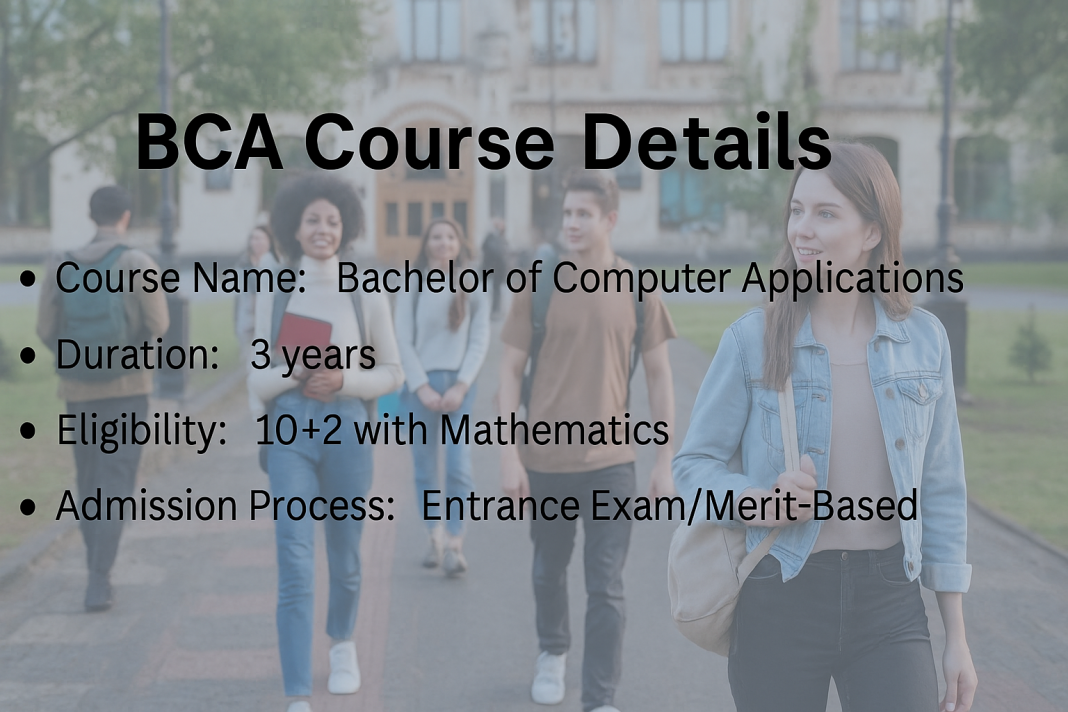
The three-year undergraduate Bachelor of Computer Applications (BCA) programme emphasises the fundamentals of software development and computer applications. It is intended for students with an interest in systems analysis, programming languages, and computers. The course gives students the technical know-how needed to create software programmes and use computer technology to tackle challenging challenges.
2. Length and Organisation
Usually lasting three years, the BCA programme is broken up into six semesters. While the majority of universities now employ the semester system, several still follow an annual rhythm. The academic topics, practical sessions, assignments, project work, and occasionally industrial training or internships to gain practical experience are all covered in each semester.
3. Qualifications
Students must have finished their 10+2 or its equivalent from an accredited educational board in order to pursue a BCA degree. Many colleges accept applications from students in any field, including science, business, or the arts, however some demand computer science or mathematics as a high school subject. Depending on the organisation, the minimum percentage needed typically falls between 45% and 60%.
4. The Admissions Procedure
Both entrance exams and merit-based admission are options for BCA programmes. Reputable colleges may administer their own entrance exams or take into account results from state or national examinations. The final deciding criterion in merit-based admissions is the 10+2 grades. Prior to final admission, several private colleges also hold counselling sessions or interviews.
5. Curriculum and Core Subjects
The goal of the BCA programme is to give students a well-rounded understanding of computing’s theoretical and applied components. Typical core subjects are:
Languages for Programming (C, C++, Java, Python)
Algorithms and Data Structures
Systems for managing databases (DBMS)
Networks of Computers
Development of Web Pages
Systems of Operation
Engineering Software
Object-Oriented Software Development
Data Science (in certain new curricula)
Development of Mobile Applications
Training in soft skills, aptitude development, and small or large project work in the last semesters are frequently added to the curriculum.
6. Emphasis on Skill Development
BCA places a strong emphasis on practical skills including web programming, coding, debugging, and application testing in addition to academic theory. Students gain knowledge of managing databases, creating websites and mobile applications, and working with real-time systems. Graduates of BCA programmes are prepared for the workforce with these competencies.
7. Electives and Specialisations
Specialisations within the BCA programme are now offered by several universities, enabling students to concentrate on particular subjects like:
Machine Learning and Artificial Intelligence
Cybersecurity
Cloud-Based Computing
Analytics of Data
Development of Games
The Internet of Things
Students have the freedom to select electives that correspond with their professional interests or new developments in the field.
8. Distinction Between B.Tech (CSE) and BCA
Choosing between a BCA and a B.Tech in computer science is a popular query among applicants. B.Tech is an engineering course that goes deeper into hardware, mathematics, and theoretical computer science, even though both courses centre on computing. In contrast, BCA is more pragmatic and application-focused. For those who wish to enter the IT business rapidly without getting an engineering degree, a BCA is the best option.
9. Options for Higher Education Following BCA
Many students choose to pursue postgraduate study after earning their BCA in order to improve their knowledge and employment opportunities. Typical options consist of:
Computer Applications Master’s degree (MCA)
Master of Business Administration in Information Technology
Computer Science Master’s degree
PG Diploma in Cybersecurity, AI, or Data Science
In the cutthroat tech sector, higher education aids in landing better positions and better compensation packages.
10. Employment Possibilities Graduates of BCA programmes can pursue a variety of IT and software-related careers. Popular positions include:
Developer of Software
Webmaster
Administrator of Databases
Analyst of Systems
Engineer for Networks
Analyst for Cybersecurity
Analyst of Data
Developer of Mobile Apps
Executive in IT Support
There is a steady need for certified BCA professionals in a variety of businesses thanks to the always expanding IT sector.
11. Leading Employers of BCA Graduates
BCA graduates are employed by reputable firms worldwide for entry-level tech roles. Leading recruiters consist of:
TCS
Wipro
The Infosys
Accenture
IBM
Technologies HCL
Capgemini
Deloitte
Amazon
Mahindra Tech
For recent grads, startups and mid-sized businesses also have fantastic growth prospects.
12. Opportunities for Freelancing and Entrepreneurship
Entrepreneurial or flexible-minded BCA grads may want to consider freelancing in digital services, app design, and web development. Many BCA graduates also create their own tech firms or digital businesses in niche areas with the correct network and expertise.
13. Practical Training and Internships
A BCA student’s career is greatly influenced by their internship experience. The majority of schools either mandate or encourage internships during their last semesters. Through practical experience, industry knowledge, and the development of relationships, internships frequently result in job offers after graduation.
14. Employment Opportunities in Government
Graduates of BCA programmes can work for the government in a variety of positions in industries including as public sector undertakings (PSUs), railways, banking (IBPS, SBI), and defence services. They can also apply for jobs in different departments as technical assistants, IT officers, and data entry operators if they know how to programme and use computers.
15. Online and Remote BCA Courses
A number of reputable colleges provide online BCA programmes or distance learning for those who are unable to attend traditional college. These classes are made to be flexible without sacrificing academic integrity. Students must, however, confirm that the school has UGC approval and that the degree is transferrable to other courses or jobs.
16. The BCA’s Global Reach
Reputable Indian colleges award BCA degrees that are accepted throughout the world. After obtaining work experience, students can apply for international IT positions or continue their education overseas. For qualified IT workers, nations like Canada, the UK, and Australia provide specialised master’s programmes and work visas.
17. Scholarships and Fees
A BCA course might cost anywhere from ₹20,000 to ₹1,50,000 annually, depending on whether the college is private or government-run. Scholarships are given by several colleges according upon entrance exam results, financial status, or merit. Furthermore, a number of corporate foundations and NGOs offer educational subsidies to worthy students.
18. Computer Science B.Sc. vs. BCA
Although both programmes provide computer education, BCA emphasises software and application development and is more professionally oriented. More intellectual and theory-focused, a B.Sc. in computer science frequently prepares students for research or higher education. Students should make their decision based on whether they wish to pursue academic endeavours or begin working right away.
19. Difficulties BCA Students Face
The rapidly evolving nature of technology, the requirement for ongoing skill development, and competition from B.Tech graduates are some of the difficulties faced by BCA students. However, BCA graduates can successfully compete in the job market provided they have the proper mindset, credentials, and practical abilities.
20. Final Thoughts: Should You Choose BCA?
For students who are enthusiastic about computers, software development, and cutting-edge technology, a BCA is a great career choice. Combining theory and practice, it provides a well-rounded education in IT and opens up a variety of career options in one of the world’s fastest-growing sectors. The demand for tech-savvy workers will only grow as digital transformation spreads across industries, making BCA a wise and prepared option.
